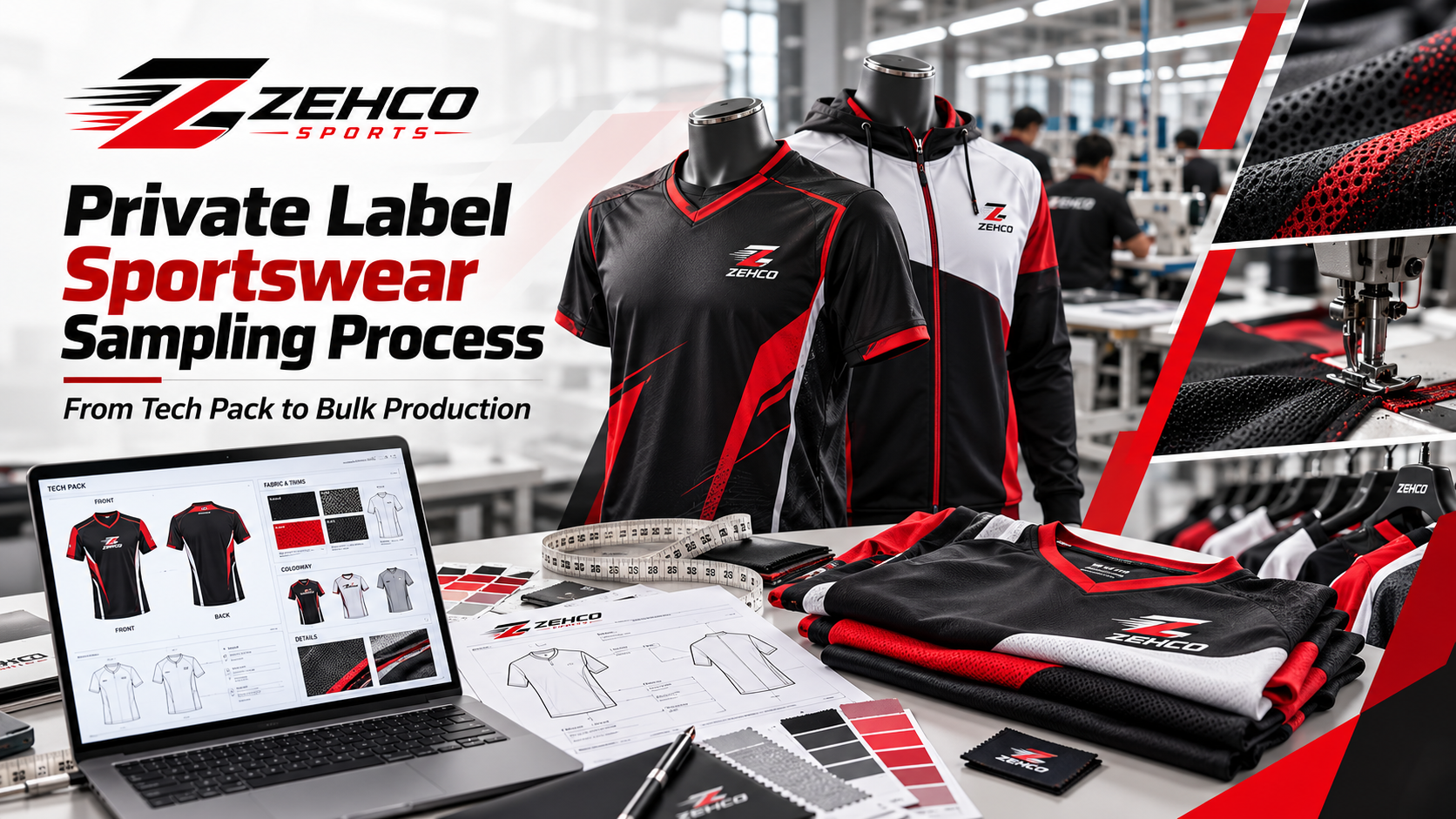
Introduction: Why Sampling Is the Foundation of Successful Sportswear Manufacturing
The sportswear sampling process is one of the most important stages in developing a successful private-label apparel collection. Before committing to bulk manufacturing, international buyers need confidence that their designs, fabrics, measurements, construction methods and branding requirements can be reproduced consistently.
For emerging sportswear labels, established apparel distributors and professional teams, an effective sampling strategy reduces the risk of incorrect sizing, unexpected production costs, unsuitable materials and disappointing finished garments.
ZEHCO Sports, a custom OEM, ODM and private-label sportswear manufacturer based in Sialkot, Pakistan, works with international buyers seeking customized production solutions for team sportswear, motorcycle racing apparel, fight wear and other performance garments.
This guide explains how buyers can approach product development systematically, communicate technical requirements and establish reliable approval procedures before placing larger manufacturing orders.
1. Understanding the Sportswear Sampling Process
Sampling converts an apparel concept into a physical product that can be evaluated before production. Depending on product complexity, manufacturers may develop several sample versions before the buyer approves the final specification.
Prototype Sample
The initial prototype demonstrates the proposed design, garment construction and approximate fit. It allows manufacturers and buyers to identify technical limitations and determine whether the selected materials are appropriate for the intended use.
Fit Sample
A fit sample focuses on dimensions, movement, proportions and wearer comfort. For athletic garments, buyers should evaluate the sample during relevant physical activities rather than relying exclusively on static photographs.
Pre-Production Sample
The pre-production sample should represent the approved construction, material specifications, measurements, decoration and finishing expected in bulk manufacturing. Once approved, it becomes a practical reference for production and inspection.
Not every project requires three separate physical samples. A straightforward repeat design may need fewer development rounds, while protective racing apparel or technically demanding products can require additional evaluation.
2. Preparing a Professional Sportswear Tech Pack
A technical specification package, commonly called a tech pack, provides the manufacturing instructions needed to convert a design into a repeatable product. Incomplete specifications can lead to repeated revisions, delayed quotations and inconsistencies between samples.
Essential Information Buyers Should Provide
- Front, back and relevant side-view garment illustrations.
- Detailed measurement charts with specified measurement points.
- Fabric composition, approximate weight and performance expectations.
- Stitching and seam construction requirements.
- Logo placement, decoration dimensions and artwork files.
- Color references and acceptable shade tolerances.
- Label, care instruction and packaging specifications.
- Target quantities, size distribution and expected delivery requirements.
Buyers should provide measurements in a consistent unit, identify whether dimensions refer to finished garments or body measurements, and specify acceptable production tolerances.
If a brand does not yet have a complete tech pack, reference garments, photographs, sketches and written specifications can support an initial development discussion. However, the agreed specifications should be documented before production approval.
3. Choosing Suitable Performance Fabrics
Fabric selection affects comfort, appearance, durability, printing quality and overall manufacturing cost. Buyers should evaluate textiles according to intended sport, climate, garment construction and target retail positioning.
Polyester Performance Fabrics
Polyester is frequently selected for basketball jerseys, football kits, training apparel and other teamwear because it can provide durability, relatively low moisture absorption and compatibility with suitable sublimation printing processes.
Mesh and Ventilated Materials
Mesh fabrics can improve air circulation, although their transparency, strength and feel vary considerably. Buyers should verify whether the selected material is appropriate for single-layer garments, lined designs or high-contact sports.
Stretch Fabric Blends
Polyester-elastane, nylon-elastane and related blends are useful for compression garments, fitted training wear and products requiring flexible movement. Stretch percentage, recovery, opacity and resistance to repeated washing deserve particular attention.
Fabric Weight and GSM
GSM means grams per square meter. A lighter fabric is not automatically better for athletic performance, and a heavier fabric does not necessarily offer higher quality. Appropriate GSM depends on garment structure, comfort, durability and the expected application.
Manufacturers and buyers should agree on fabric swatches, composition, finishing characteristics and acceptable substitutions before finalizing samples.
4. Evaluating Decoration and Private-Label Branding
Custom sportswear manufacturing often includes sublimation printing, screen printing, heat transfers, embroidery, woven labels and branded packaging. Each method introduces different visual, technical and commercial considerations.
Sublimation Printing
Sublimation is suitable for many polyester-based garments requiring detailed graphics, gradients and all-over designs. Buyers should confirm fabric compatibility and review how colors appear on the actual material.
Embroidery
Embroidery can create a premium textured appearance for smaller logos, patches and selected design elements. Dense embroidery may add stiffness or weight, making placement particularly important on lightweight jerseys.
Heat Transfers and Screen Printing
These techniques can be appropriate for logos, numbers and graphic elements, depending on material, order quantity and design complexity. Buyers should assess adhesion, flexibility, wash durability and compatibility with stretch fabrics.
Custom Labels and Packaging
Private-label buyers should specify neck labels, size labels, care labels, hangtags, barcode requirements and individual packaging. Branding components must be reviewed for accuracy and compliance with the destination market's applicable requirements.
5. Testing Fit, Measurements and Functionality
A sample that looks attractive in photographs may still fail to meet practical performance requirements. Structured fitting and functional testing are therefore essential before approving production.
For basketball and baseball uniforms, buyers can assess arm movement, shoulder fit, garment length and comfort during athletic activity. For fight wear, they should examine flexibility, seam positioning and resistance to movement-related stress.
Motorcycle racing apparel requires additional consideration of construction, intended protective features and compatibility with relevant safety requirements. Visual inspection or informal fit testing must not be treated as evidence of protective certification.
Recommended Sample Evaluation Checklist
- Compare measurements against the approved size chart.
- Inspect seams, stitching consistency and reinforcement.
- Assess comfort and movement under realistic conditions.
- Check the accuracy and positioning of printed or embroidered graphics.
- Inspect color consistency and fabric appearance.
- Evaluate garment behavior after appropriate washing or care tests.
- Record every required revision with clear photographs and measurements.
Where laboratory performance testing or certification is necessary, buyers should establish the applicable standard and arrange suitable testing through qualified facilities.
6. Managing Sample Revisions Without Delaying Production
Repeated sampling can increase development costs and extend lead times. Buyers can improve efficiency by consolidating feedback rather than issuing isolated design changes after each discussion.
A practical revision record should identify the sample version, affected garment area, original specification, requested change and approval status. Comments such as 'make the sleeve better' are less useful than a precise instruction identifying the measurement or construction to be adjusted.
When multiple stakeholders review the same sample, one authorized representative should consolidate their feedback before communicating revisions to the manufacturer.
After final approval, both parties should maintain the same specification version to prevent production teams from working with outdated measurements or artwork.
7. Understanding Sample Costs, MOQ and Lead Times
Sampling charges and minimum order quantities vary according to product type, complexity, fabric availability, decoration methods and manufacturing requirements.
Simple polyester teamwear can differ significantly in development cost from multi-panel racing garments involving specialized materials and detailed construction.
What Influences Sampling Costs?
- Pattern development and technical design work.
- Material sourcing and minimum fabric purchase quantities.
- Printing screens, embroidery digitization and other setup requirements.
- Construction complexity and specialized components.
- Number of revisions and required sample sizes.
- International courier charges and delivery destination.
Buyers should request separate clarification of sample development charges, courier costs and potential additional revision expenses.
How MOQ Affects Product Planning
MOQ refers to minimum order quantity. For private-label projects, minimum quantities can depend on fabric sourcing, color selection, size assortment and decoration methods.
Combining compatible designs or standardizing materials across styles may help improve production efficiency. However, buyers should confirm whether minimum quantities apply per style, color, design or total purchase order.
Rather than assuming a fixed production timeline, buyers should request written schedules covering material sourcing, sample development, approval, manufacturing, inspection and shipping.
8. Moving from Approved Samples to Bulk Sportswear Manufacturing
Final sample approval marks the transition from product development to production planning. At this stage, the buyer and manufacturer should confirm the commercial and technical details that will govern the order.
Final Production Confirmation
- Approved sample reference and specification version.
- Confirmed quantities by style, size and color.
- Approved fabric and trim specifications.
- Final artwork, placement measurements and decoration methods.
- Packaging and labeling requirements.
- Inspection arrangements and acceptance criteria.
- Payment terms, delivery terms and shipping responsibilities.
The approved sample should be supported by written specifications because some important characteristics, such as internal seam construction or material composition, may not be immediately obvious from the garment alone.
In-Process and Final Quality Checks
Production quality control may include material inspection, cutting checks, first-piece review, in-line stitching inspections, measurement checks and final finished-garment evaluation.
For orders requiring third-party inspection, the buyer should agree on inspection scope, sampling method and acceptance criteria before production begins.
9. Shipping, Packaging and International Buyer Considerations
Export-focused sportswear sourcing requires coordination beyond the factory floor. Packaging dimensions, carton quantities, shipment weights, documentation and delivery terms all influence the landed cost of the finished products.
Buyers should establish whether their quotation uses FOB, CIF, DDP or another clearly defined Incoterms rule, identifying the named location and the responsibilities of each party.
Import duties, taxes, product labeling obligations and customs requirements depend on the destination market and product classification. These responsibilities should be reviewed before shipment rather than after merchandise reaches the importing country.
For recurring orders, maintaining approved specifications, material references and packaging instructions can improve consistency and simplify future purchasing decisions.
10. Common Mistakes International Sportswear Buyers Should Avoid
Several preventable sourcing mistakes can affect even experienced apparel businesses. Understanding these risks makes the development process more predictable.
- Approving photographs instead of physical samples: Images may not reveal fabric feel, inaccurate measurements or uncomfortable seams.
- Using incomplete measurement charts: Missing dimensions can result in inconsistent fit across sizes.
- Changing materials after approval: Substituted fabrics may affect appearance, stretch, printing and garment durability.
- Failing to document revisions: Unrecorded changes increase the risk of producing an outdated design.
- Ignoring packaging requirements: Missing labels or incorrect carton arrangements can create delivery and retail problems.
- Comparing quotations on price alone: Two quotations may cover different fabric grades, decoration processes, packaging specifications or delivery terms.
A reliable sourcing decision evaluates technical suitability, communication, production controls and total purchase costs alongside the quoted unit price.
11. Working With ZEHCO Sports for Custom Apparel Development
ZEHCO Sports is based in Sialkot, Pakistan, a manufacturing center associated with sporting goods and apparel production. The company focuses on OEM, ODM and private-label manufacturing for international buyers seeking customized athletic and racing garments.
Its product categories include motorcycle racing suits, racing gloves, motorcycle jackets, motorsport apparel, team sportswear and fight wear.
For buyers preparing a new collection, the most productive starting point is a clear inquiry containing product descriptions, reference images, expected quantities, target materials, required branding and destination country.
Providing this information helps establish an appropriate discussion about product development, sampling requirements, available manufacturing options and commercial quotations.
Buyers planning repeat orders should also discuss specification control, approved materials, quality expectations and future production requirements early in the sourcing relationship.
Conclusion: Build a Reliable Sportswear Sampling Process Before Placing Bulk Orders
A structured sportswear sampling process provides the technical foundation for successful private-label manufacturing. Detailed tech packs, appropriate material choices, meaningful sample evaluations, documented revisions and clear pre-production approval procedures can reduce preventable errors and improve order consistency.
For international apparel brands, distributors and sports teams, the objective is not simply to obtain a low-cost sample. It is to establish a garment specification that can be manufactured reliably, inspected consistently and reordered with confidence.
ZEHCO Sports welcomes inquiries from international B2B buyers exploring custom OEM, ODM and private-label sportswear manufacturing in Pakistan.
Explore manufacturing solutions and submit your product requirements at https://zehcosports.com/.