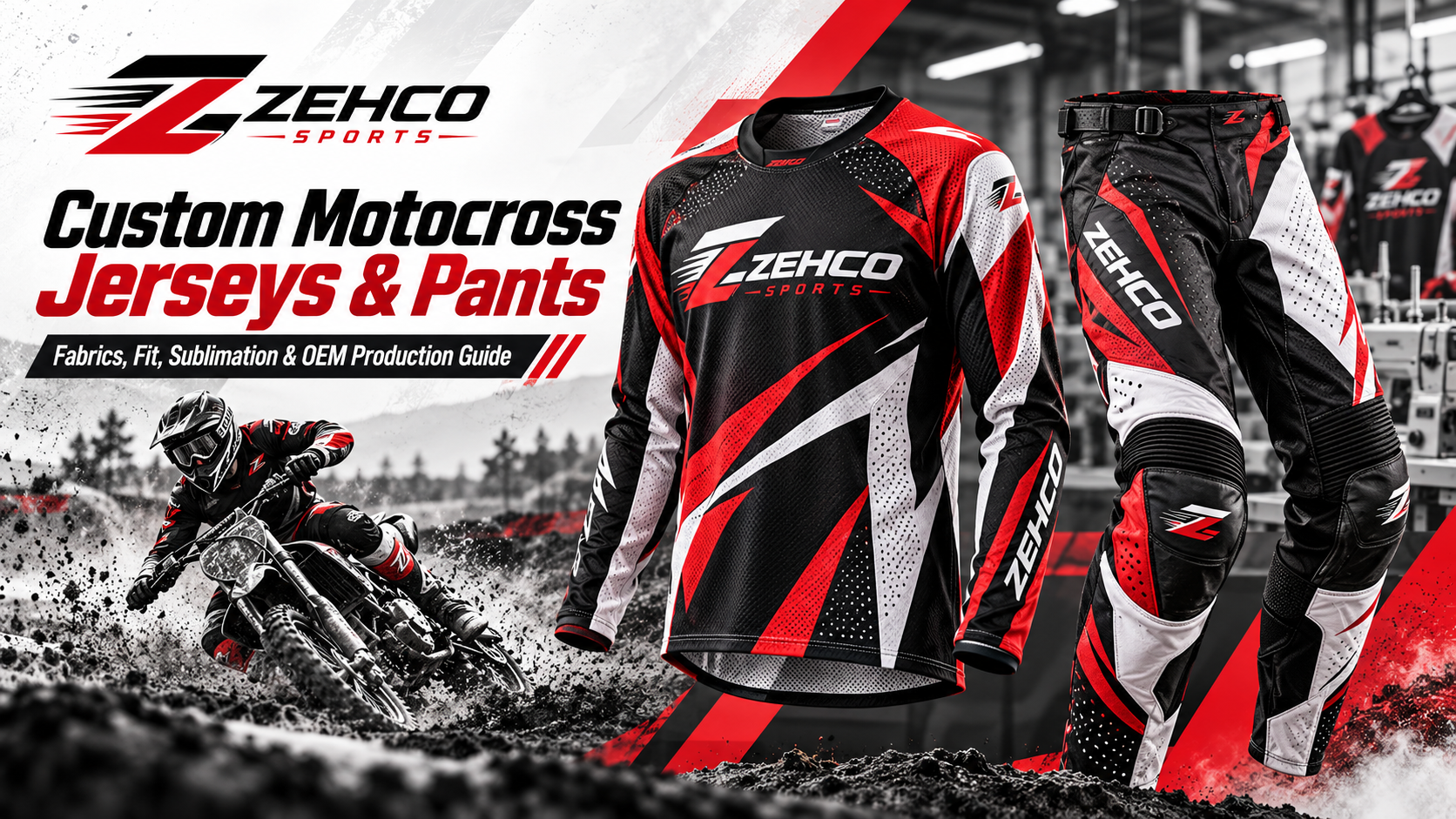
For motorcycle racing teams, independent apparel brands and international distributors, sourcing custom motocross jerseys and pants involves more than choosing attractive graphics. Motocross clothing must accommodate dynamic riding positions, changes in body movement, protective equipment and demanding off-road conditions. Buyers also need consistent sizing, reproducible colors, reliable stitching and an organized production process.
A well-developed motocross collection combines a lightweight upper garment with riding pants engineered around flexibility and high-contact areas. The two pieces should work together visually and functionally without being treated as identical products. This guide explains how to prepare a practical OEM or private-label manufacturing brief, evaluate samples and reduce avoidable risks before bulk production.
Understanding Custom Motocross Jersey and Pants Manufacturing
Motocross jerseys and pants serve different purposes. The jersey normally emphasizes ventilation, unrestricted arm movement, comfortable layering and graphic presentation. Pants require more structured construction, carefully positioned stretch panels, a secure waist closure and consideration of contact with the motorcycle, boots and knee equipment.
Brands should define whether the collection is intended for competitive motocross, recreational trail riding, enduro use or promotional team clothing. These applications may require different fits, reinforcement locations and material combinations. A design intended primarily for visual team identity should not automatically be presented as certified protective equipment.
OEM versus Private-Label Production
OEM development generally follows buyer-approved designs, measurements, material specifications and technical requirements. Private-label production also includes brand-specific elements such as woven labels, care instructions, customized packaging and coordinated product presentation. The precise services, minimum quantities and approval stages should be confirmed with the manufacturer before ordering.
Choosing Fabrics for Custom Motocross Jerseys and Pants
Jersey Materials and Breathability
Polyester-based knitted fabrics are commonly considered for motocross jerseys because they can support lightweight construction, moisture management and full-color printing. Mesh or perforated knit panels may be specified around the underarms, sides or back to improve airflow. Fabric weight alone does not determine comfort: knit structure, stretch, skin feel and ventilation placement also matter.
Buyers should request fabric swatches and clarify composition, weight, stretch recovery, expected care conditions and color performance. When a design combines solid fabric with open mesh, the approved sample should be checked for shade variation and differences in print appearance between the materials.
Pants Materials and Reinforcement Zones
Motocross pants usually need a more varied material specification. Depending on the approved design, a woven polyester or nylon-based shell may be combined with stretch textiles at the crotch, rear yoke and knees. Selected seat and inner-knee regions may require additional panels to address friction, repeated movement and contact with the motorcycle.
Leather or suitable synthetic materials can be evaluated for inner-knee contact panels, subject to the requested construction and testing. Material thickness, seam placement, flexibility, cleaning requirements and bulk cost should be assessed together rather than choosing reinforcement solely by appearance.
Pattern Construction and Riding-Position Fit
Motocross patterns should be developed and evaluated with the rider's posture in mind. A jersey that fits well while standing may pull across the shoulders or expose the lower back when the rider bends forward. Likewise, pants that appear comfortable off the motorcycle may restrict the knees or bunch inside riding boots.
Key Jersey Construction Details
- Shoulder and sleeve mobility: Evaluate sleeve angles and available reach when the arms extend toward handlebars.
- Collar and cuffs: Check stretch, comfort and compatibility with the intended neck and wrist equipment.
- Extended rear length: Consider a longer back hem to help maintain jersey coverage during riding.
- Seam finishing: Review internal seams for roughness, unnecessary bulk and discomfort over extended wear.
Key Motocross Pants Construction Details
- Articulated knees: Shape the leg pattern to accommodate a bent riding position.
- Brace and guard clearance: Check fit over the specific knee protection expected by the buyer.
- Waist adjustment: Specify the closure, adjustment range and required waistband stability.
- Boot interface: Determine whether the design uses an in-boot or over-boot lower-leg configuration.
- Critical seams: Identify high-stress areas requiring appropriate stitch construction or reinforcement.
Developing Accurate Size Charts and Fit Samples
A reliable size chart should distinguish body measurements from finished garment measurements. Jersey specifications may include chest width, shoulder width, total length, sleeve length, cuff opening and neck opening. Pants specifications should cover waist range, hip, rise, inseam, thigh, knee region and leg opening.
Each measurement needs an agreed method, reference point and tolerance. Buyers should also identify whether sizing targets adults, youths or particular regional markets. Do not assume that a standard size label has identical dimensions across different brands.
Fit evaluations should include standing and seated positions, forward bending, knee flexion and movement with the expected protective equipment. A sample approval record should document actual measured dimensions, wearer feedback, photographs and corrections before the complete size range is graded.
Sublimation, Branding and Graphic Decoration
Sublimation printing is an important option for polyester-based motocross jerseys because it supports detailed color combinations, sponsor-style layouts and personalized rider names or numbers. Artwork should be built around the actual cutting pattern so important graphics do not disappear into seam allowances or become distorted across panels.
For pants, the manufacturer should confirm which fabric panels are suitable for sublimation and which areas require alternative decoration. Heat-transfer graphics, embroidery or attached patches may be considered where appropriate, but each method changes the garment's hand feel, flexibility, care requirements and production workflow.
Before approving artwork, buyers should define:
- Master artwork files, approved color references and design version.
- Front, back, sleeve and leg graphic placements.
- Logo dimensions, orientation and approved sponsor positions.
- Individual rider names, numbers and their corresponding sizes.
- Brand labels, size labels, care labels and packaging artwork.
Request a digital mockup and inspect a physical printed sample. Screen colors and actual textile colors can differ, particularly when artwork crosses dissimilar fabrics.
Sampling Process Before Bulk Motocross Apparel Production
A structured sample process is one of the most effective ways to prevent repeated production corrections. The first submission should include a technical package with flat sketches, panel maps, fabric requirements, measurement charts, decoration instructions and approved accessories.
Recommended Sample Approval Stages
- Technical review: Confirm whether the requested materials, construction and decoration are practical.
- Prototype sample: Evaluate garment shape, movement, basic assembly and material placement.
- Revised fit sample: Check required adjustments with real riding movements and equipment.
- Pre-production approval: Sign off colors, measurements, labels, closures, print quality and packing details.
Not every project requires a separate physical sample for every stage, but approvals should remain traceable. Buyers should maintain a clear revision history and identify the exact approved sample or specification that controls bulk production.
MOQ, Customization and Production Planning
Minimum order quantity, or MOQ, depends on fabric sourcing, colorways, decoration methods, size assortment and production setup. A custom jersey may have different constraints from a multi-panel riding pant. Buyers should therefore obtain MOQ information separately for jerseys, pants, coordinated sets and individual designs.
Clarify whether different sizes can be combined within an MOQ and whether personalized names or numbers change the minimum. Ask about sample charges, artwork setup, material substitutions and the conditions for reorders. Avoid treating an indicative quotation as a confirmed production commitment.
A practical purchasing schedule reserves time for technical clarification, material approval, sampling, sample revisions, material procurement, cutting, decoration, stitching, inspection and dispatch. Complex color combinations and newly developed components may affect the timeline.
Quality Control for Motocross Clothing Orders
Quality inspection should compare production goods against the approved specifications rather than relying only on general visual appearance. Appropriate checks can include:
- Fabric identity, shade consistency and visible defects.
- Finished measurements against the approved tolerance chart.
- Seam integrity, stitch consistency and thread trimming.
- Correct placement of stretch and reinforcement panels.
- Function of zippers, waist adjusters and other closures.
- Print alignment, color consistency, name and number accuracy.
- Brand labels, care labels, size identification and packing accuracy.
Where buyers require specific wash durability, colorfastness, seam strength or protective performance, agree on the appropriate test method, laboratory or inspection criteria in advance. Neither garment appearance nor an unverified material description establishes compliance with a technical or protective standard.
Packaging, Export Documentation and Delivery Considerations
International buyers should specify whether garments are packed individually or as matching sets. Each package may need a size sticker, product code, color reference and buyer-approved label. Carton packing lists should match actual quantities, size breakdowns and destination requirements.
Discuss the commercial terms, delivery destination, shipment method and responsibility for customs documentation before confirming the purchase order. The final documentation and labeling requirements depend on the destination market and the agreed transaction. Packaging dimensions and gross weight should be verified after the final packing method has been approved.
RFQ Checklist for Custom Motocross Jerseys and Pants
A complete request for quotation helps manufacturers estimate materials, development work and production requirements accurately. Include the following information when contacting a potential supplier:
- Product type: jersey, pants or coordinated motocross set.
- Target market and intended riding application.
- Estimated quantities by design, colorway and size.
- Fabric preferences, construction notes and reinforcement locations.
- Measurement chart, fit reference and protective-equipment compatibility.
- Artwork files, branding methods and rider personalization details.
- Label, packaging and carton specifications.
- Sample requirements, approval procedure and target delivery date.
- Destination, requested trade term and any buyer-specific testing requirements.
Ask the supplier to identify any assumptions and proposed substitutions in writing. This makes quotations easier to compare and helps prevent unexpected differences between the sample and final shipment.
Working With ZEHCO Sports for Custom Motocross Apparel
ZEHCO Sports is a Sialkot-based OEM/ODM and private-label sportswear and racing-gear manufacturer serving brands, distributors and racing teams. Buyers exploring custom motocross jersey and pants projects can use their technical specifications to discuss material choices, graphic decoration, sampling and production planning. Individual construction options, minimum quantities and delivery commitments should be confirmed for each inquiry.
Successful sourcing begins with accurate technical information and a clearly documented approval process. By selecting fabrics according to garment function, testing riding-position fit, reviewing sample construction and defining quality requirements, buyers can develop custom motocross jerseys and pants that support consistent branding and more predictable OEM production.