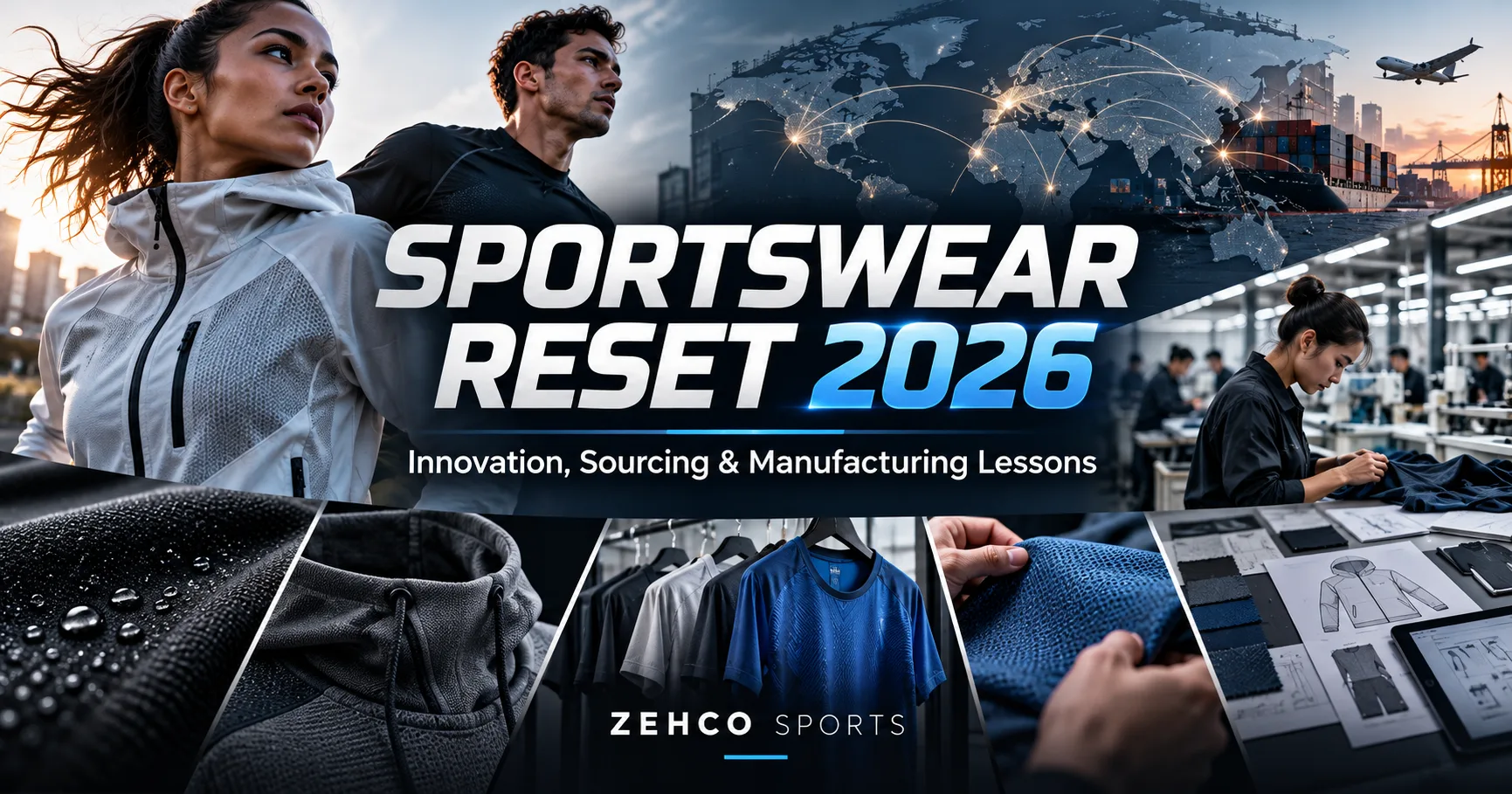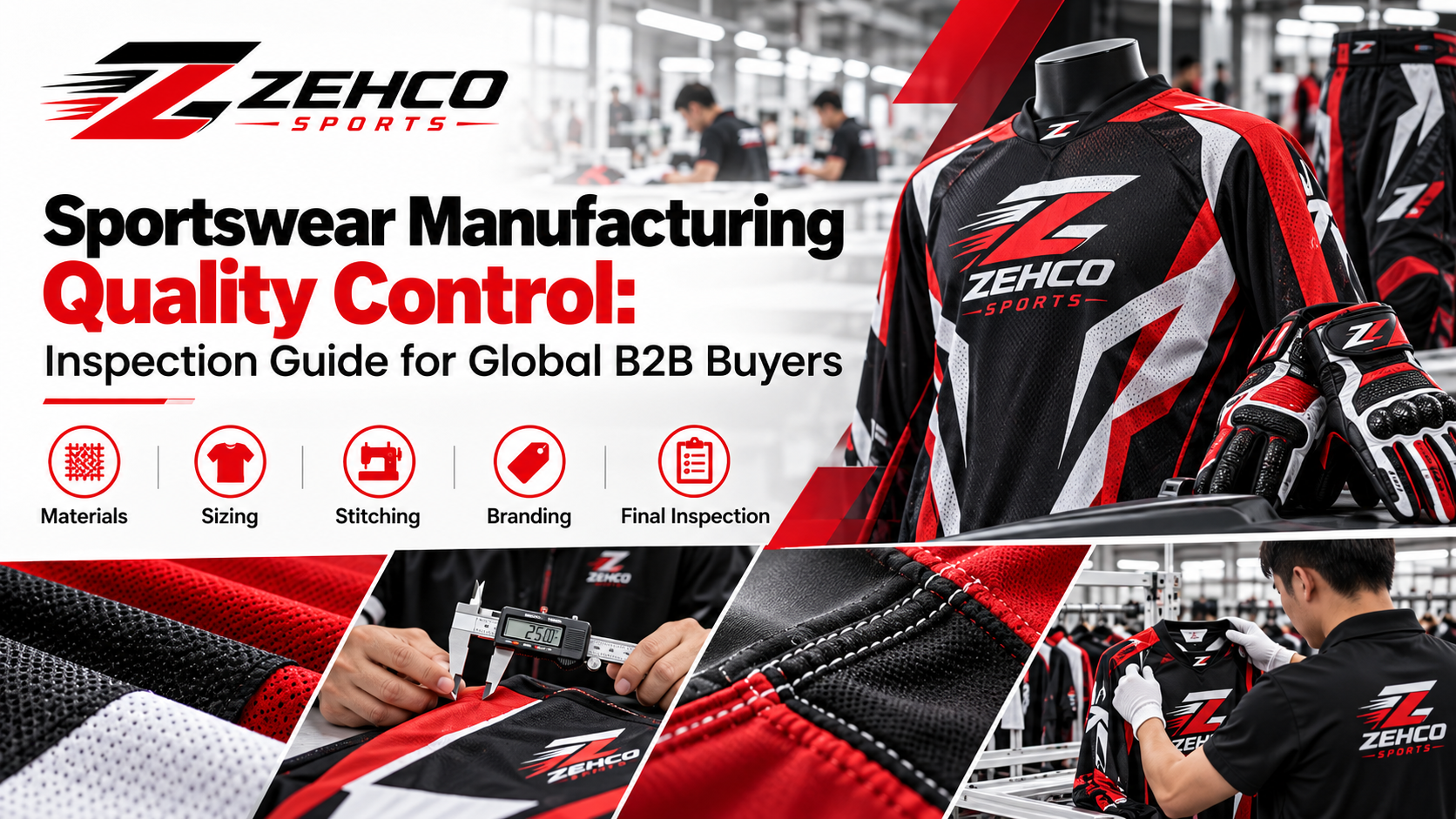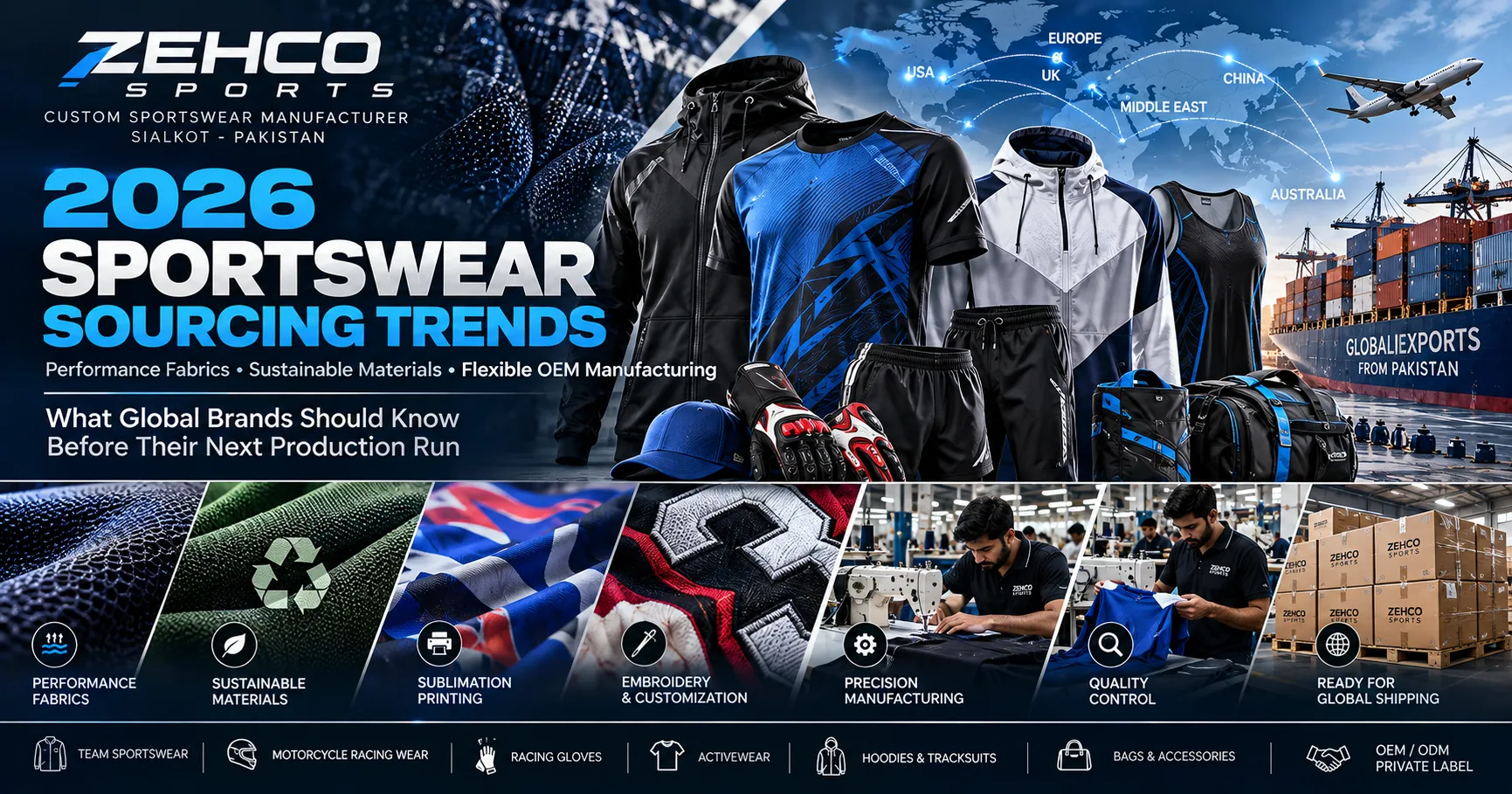
Sportswear sourcing in 2026 is becoming more demanding. Global brands are no longer evaluating factories only on price and basic cut-and-sew capacity. Performance fabrics, material traceability, sustainable options, flexible sampling, customization capability and reliable repeat production are increasingly shaping supplier selection.
Recent industry reporting shows a broader shift toward preferred and certified materials. Textile Exchange reported that participating brands and retailers increased their use of cotton, polyester, polyamide, viscose and wool sourced through standards, certifications and other preferred-production programs from 68% in 2024 to 72% in 2025. For sportswear buyers, that direction matters because fabric sourcing decisions are becoming part of both product performance and brand positioning.
Performance fabrics are moving beyond basic moisture management
For many sportswear categories, buyers now expect more than simple polyester or cotton construction. Product briefs increasingly ask for lightweight mesh, four-way stretch, breathability, quick-dry performance, abrasion resistance, compression, thermal management and durable color performance.
This affects manufacturing decisions from the start. Fabric weight, GSM, composition, stretch recovery and finishing should be approved during sampling, because the same design can perform very differently when produced in another fabric quality. Brands should therefore specify intended use — teamwear, gymwear, motorcycle racing apparel, training gear, hoodies or lifestyle activewear — before bulk production begins.
Sustainable materials are becoming a sourcing requirement for more brands
Recycled polyester, recycled nylon and other preferred-material programs are becoming more common in global apparel procurement. Buyers targeting European, North American and premium retail markets increasingly request documentation supporting material origin, recycled content or compliance claims.
For private-label brands, sustainability should be treated as a specification issue rather than only a marketing claim. If recycled fabric is required, buyers should confirm the exact composition, certification expectations, minimum order quantity and whether the approved material will remain available for repeat production.
Hybrid sportswear and athleisure are changing product development
Sportswear collections are also becoming more versatile. Many garments are now designed to work across training, travel, casual wear and streetwear. This increases demand for clean silhouettes, lightweight jackets, technical hoodies, tracksuits, compression products and coordinated teamwear that can perform both on and off the field.
For manufacturers, this trend requires stronger development capability because buyers may combine performance fabric, fashion-oriented fit and multiple branding techniques in the same product line.
Sublimation, embroidery and mixed decoration strategies
Decoration choices can directly affect garment cost, weight and production quality. Sublimation remains highly effective for complex backgrounds, gradients, topographic artwork, mascots and full-panel graphics on polyester fabrics. Embroidery and tackle-twill techniques are better suited to selected numbers, lettering, logos and premium details.
Heavy embroidery across large areas can increase garment weight and may affect the drape of lightweight sports fabrics. A mixed strategy — using sublimation for large artwork and embroidery for high-value branding elements — can provide a more balanced result.
Flexible OEM and ODM manufacturing matters more in 2026
Smaller and mid-sized sports brands often need factories that can support multiple stages of development, including design interpretation, fabric sourcing, sampling, sizing, labeling, packaging and repeat bulk orders. This is where flexible OEM and ODM manufacturing becomes valuable.
A professional supplier should be able to translate a concept into a production-ready specification, identify construction risks during sampling and maintain consistency when the order scales from samples to 50, 100, 500 or more pieces.
What brands should check before placing a bulk order
Before confirming production, buyers should review fabric composition and GSM, size specifications, color standards, logo placement, embroidery or print method, labels, packaging, MOQ, sample approval, production lead time and inspection requirements.
For motorcycle racing wear and protective apparel, material selection and construction details become even more important. Leather grade, Cordura specification, reinforcement areas, protectors, zippers and stitching methods should be confirmed before bulk production.
Why Sialkot remains important for custom sportswear sourcing
Sialkot, Pakistan, has a long manufacturing history in sports goods and performance apparel. The cluster supports specialized skills in teamwear, gloves, racing garments, leather products, sublimation, embroidery and private-label production.
For international buyers, working with an experienced Sialkot manufacturer can provide access to a concentrated supplier ecosystem and customization capability across multiple sportswear categories.
ZEHCO Sports: OEM, ODM and private-label production
ZEHCO Sports is a custom sportswear and racing gear manufacturer based in Sialkot, Pakistan. The company supports OEM, ODM and private-label production for apparel brands, distributors, racing teams, clubs and sourcing companies.
Core categories include motorcycle racing wear, racing gloves, motorcycle jackets, motorsport suits, basketball and team sportswear, fight wear, tracksuits, hoodies, activewear and bags. Buyers can develop products using custom fabrics, sublimation, embroidery, labels and packaging according to their target market.
For an accurate quotation, buyers should provide product references or technical drawings, required material, quantity per design, size range, branding method, destination and preferred Incoterm.
This article is intended as general sourcing and manufacturing information. Material availability, MOQ, lead time and pricing vary by product specification and order volume.