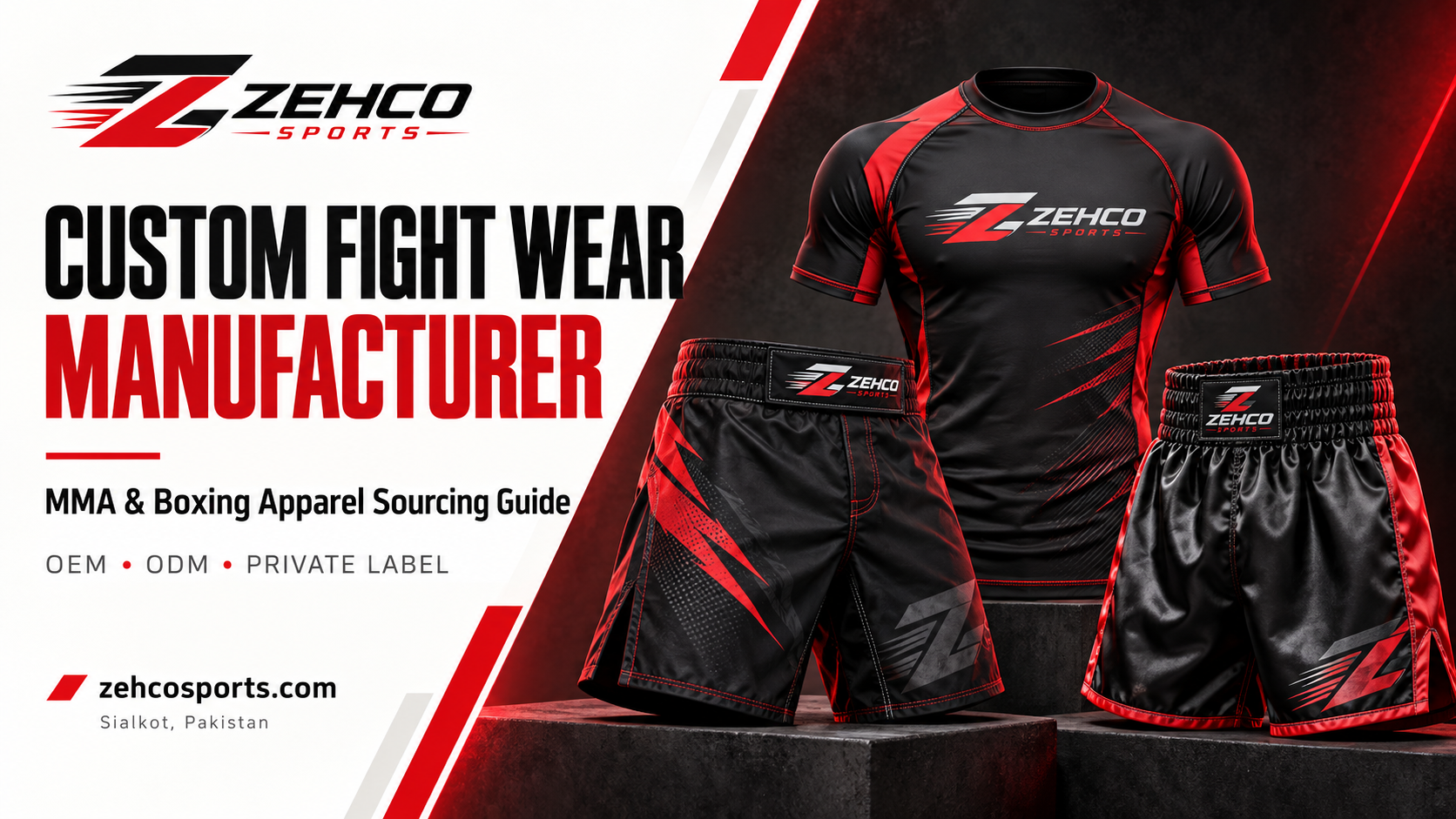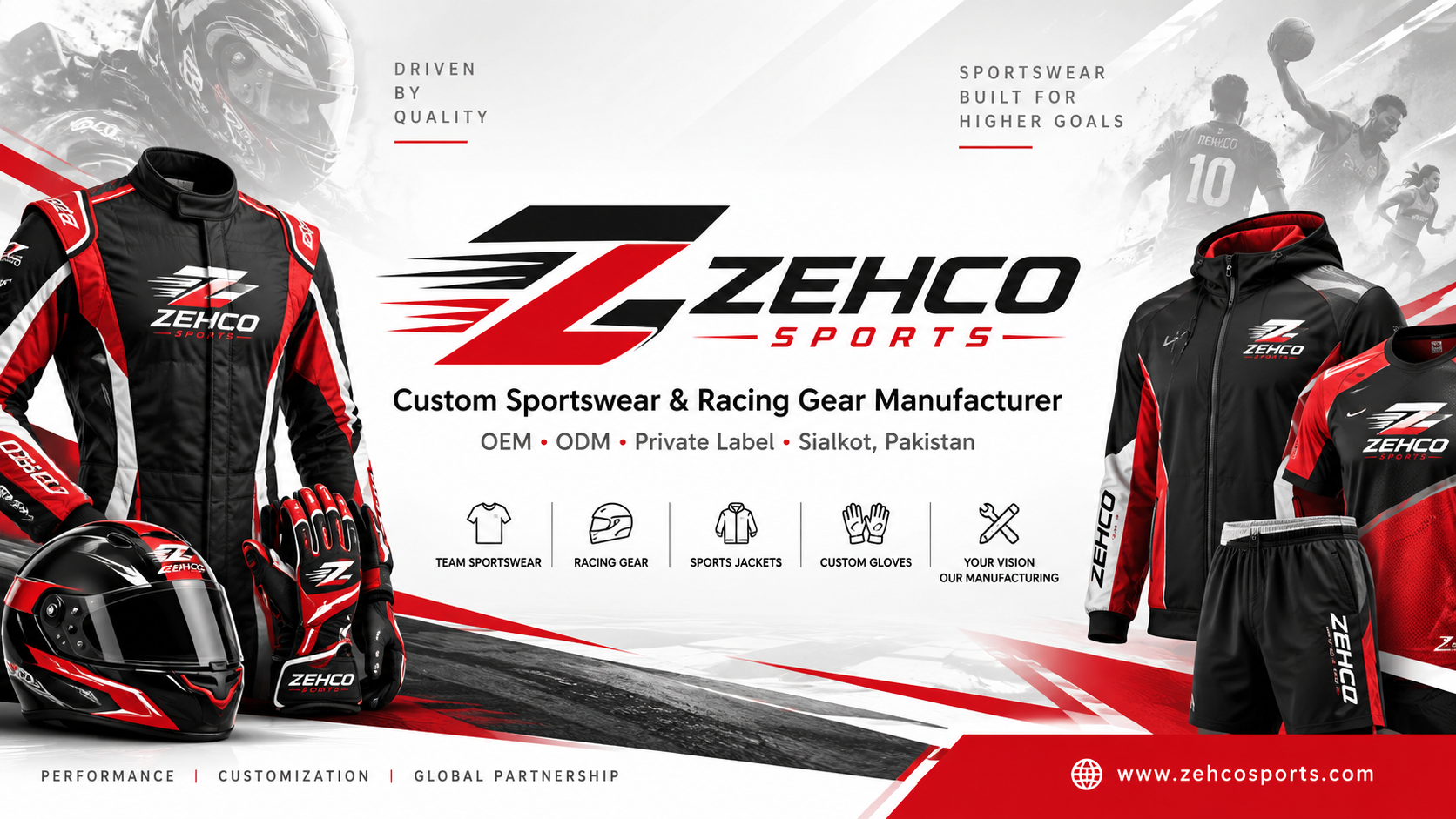
Choosing the right custom team sportswear manufacturer is essential for apparel brands, sports clubs, distributors and professional teams that need consistent quality, accurate branding and dependable delivery. ZEHCO Sports manufactures custom uniforms and performance apparel in Sialkot, Pakistan, supporting OEM, ODM and private-label orders for international buyers.
A reliable manufacturing partner should provide more than attractive designs. Buyers must evaluate fabric performance, sizing accuracy, decoration methods, production controls, packaging, minimum order quantities and repeat-order capability. This guide explains the main factors to consider when sourcing custom team sportswear for baseball, basketball, football, volleyball, cricket, rugby, training and other team activities.
Why Work with a Custom Team Sportswear Manufacturer?
Working directly with a manufacturer gives buyers greater control over product design, materials, branding and pricing. Instead of selecting from limited ready-made stock, brands and teams can develop apparel according to their exact colors, logos, measurements and performance requirements.
Direct manufacturing also supports better communication during sampling and production. Buyers can discuss artwork placement, fabric weight, collar construction, sleeve design, fit preferences and packaging requirements before bulk production begins. This reduces the risk of receiving uniforms that do not match the approved design.
For distributors and private-label brands, a manufacturing relationship can create a repeatable product line. The same patterns, colors and branding standards can be maintained across future orders, helping build consistency and customer recognition in different markets.
Custom Team Sportswear Manufacturing Options
Team Jerseys and Match Shirts
Custom jerseys can be produced for basketball, football, baseball, volleyball, cricket, rugby and other sports. Buyers can specify sleeveless or short-sleeve designs, V-neck or round-neck collars, contrast panels, side inserts and player-number placement.
Important specifications include the fabric composition, stretch level, breathability, colorfastness and garment weight. Match shirts should provide freedom of movement while remaining comfortable during extended training or competition.
Shorts, Trousers and Training Bottoms
Teamwear programs often require coordinated shorts, trousers or training bottoms. These products can include elastic waistbands, drawcords, side pockets, contrast piping and customized logos. The correct construction depends on the sport, climate and intended use.
For high-intensity sports, lightweight and moisture-managing materials are usually preferred. For travel, warm-ups and outdoor training, buyers may request heavier fabric, fleece lining or water-resistant finishes.
Tracksuits, Hoodies and Jackets
Tracksuits, hoodies and team jackets help create a complete identity beyond the match uniform. They are commonly used for travel, presentations, training sessions, tournaments and club merchandise programs.
Brands can develop coordinated collections using embroidered logos, woven labels, heat transfers, screen printing or sublimated panels. Details such as full-zip construction, hood shape, cuff design and pocket placement should be confirmed during the sampling stage.
Fabric Selection for Custom Team Sportswear
Fabric selection directly affects comfort, durability and customer satisfaction. Polyester is widely used for teamwear because it is lightweight, durable and suitable for sublimation printing. Polyester blends can provide a different hand feel, improved stretch or a more premium appearance.
Common fabric considerations include moisture management, air permeability, stretch recovery, abrasion resistance and washing performance. A supplier should be able to explain how each material performs under the buyer’s intended conditions rather than recommending one fabric for every product.
International buyers should also request fabric samples before approving bulk production. A material that looks suitable in a photograph may feel too thin, too heavy or insufficiently breathable when used in an actual uniform.
Branding and Custom Decoration Methods
Sublimation Printing
Sublimation is suitable for all-over graphics, gradients, complex patterns, sponsor logos and detailed team designs. The artwork becomes part of the fabric surface, which helps prevent cracking or peeling when the garment is washed and used regularly.
Before production, buyers should provide high-resolution logos and confirm the correct color references. Digital colors can appear different across screens, so a physical sample or approved color standard is valuable for important brand projects.
Embroidery and Heat Transfer
Embroidery is often used for polo shirts, jackets, caps, hoodies and premium teamwear. It creates a durable raised finish but may not be suitable for very thin or highly elastic fabrics. Heat transfers are useful for names, numbers, small logos and detailed graphics.
Each decoration method should be selected according to the garment material, logo size, expected washing conditions and desired visual effect. Professional manufacturers can recommend the most appropriate process for each part of a collection.
Sampling and Approval Process
A dependable custom team sportswear manufacturer should use a clear sample approval process before starting bulk production. The buyer should review the design, measurements, colors, fabric, logo placement, labels, trims and packaging requirements.
Sample comments should be recorded in writing so that revisions are not misunderstood. If the design includes multiple sizes or several garment styles, the buyer should confirm whether one prototype represents the complete size range or whether additional fitting samples are required.
Bulk production should begin only after the final sample or digital specification has been approved. Any later changes to the artwork, fabric or measurements can affect the price and production schedule.
MOQ, Lead Time and Bulk Production Planning
Minimum order quantities vary according to the product type, fabric, printing process and customization level. Buyers should ask whether the MOQ applies per design, per color, per size or to the complete order. This is particularly important for new brands testing a collection or teams ordering different size combinations.
Production lead time depends on artwork approval, material availability, sample revisions and order volume. A realistic production plan should include time for sampling, material sourcing, cutting, stitching, decoration, quality control and packing.
For tournament uniforms or seasonal collections, international buyers should place orders early and confirm shipping requirements before production starts. Air freight may support urgent delivery, while sea freight can be more economical for larger commercial orders.
Quality Control for Team Uniforms
Quality control should cover both the garment and the branding. Important checks include measurement accuracy, seam strength, fabric defects, print alignment, logo color, number placement, stitching quality, zipper operation and label information.
For multi-size team orders, random pieces from each size should be measured against the approved specification. Packaging should also be checked to ensure that sizes, styles and player names are correctly organized.
Buyers can request pre-shipment photographs, inspection reports or third-party inspections depending on the size and importance of the order. Clear quality standards at the beginning of the project help prevent disagreements after delivery.
Private-Label and OEM Support for International Buyers
Private-label buyers may require woven labels, printed care labels, branded packaging, hangtags, barcode stickers and customized polybags. These components should be discussed before the quotation is finalized because they influence both cost and production timing.
OEM buyers can provide their own technical packs, while ODM buyers may request help developing the design from an initial concept. A capable supplier should be able to assist with artwork preparation, material selection, pattern development and production specifications.
ZEHCO Sports supports custom manufacturing for apparel brands, distributors, clubs and sourcing companies seeking coordinated sportswear collections. The production process can be adapted to different product categories, branding methods and order requirements.
How to Choose the Right Manufacturing Partner
- Review the manufacturer’s experience with your sport and product category.
- Request fabric, decoration and finished-garment samples before placing a large order.
- Confirm the MOQ, production lead time and payment terms in writing.
- Ask how artwork, measurements and size specifications are approved.
- Check whether the factory can support repeat orders with consistent materials and colors.
- Confirm packaging, labeling and export documentation requirements.
- Discuss inspection procedures and how quality issues are handled.
Buyers should also evaluate communication speed and technical understanding. A supplier that responds clearly to detailed questions is more likely to manage revisions and production requirements effectively.
Conclusion: Source Custom Team Sportswear with Confidence
Sourcing from an experienced custom team sportswear manufacturer allows international buyers to develop better uniforms, stronger brand identity and more reliable repeat production. The best results come from selecting suitable fabrics, approving detailed samples, confirming branding specifications and establishing clear quality standards before bulk manufacturing.
ZEHCO Sports provides OEM, ODM and private-label sportswear manufacturing from Sialkot, Pakistan, serving apparel brands, distributors, teams and importers. Contact ZEHCO Sports to discuss your product concept, materials, artwork, sampling requirements and bulk teamwear order.